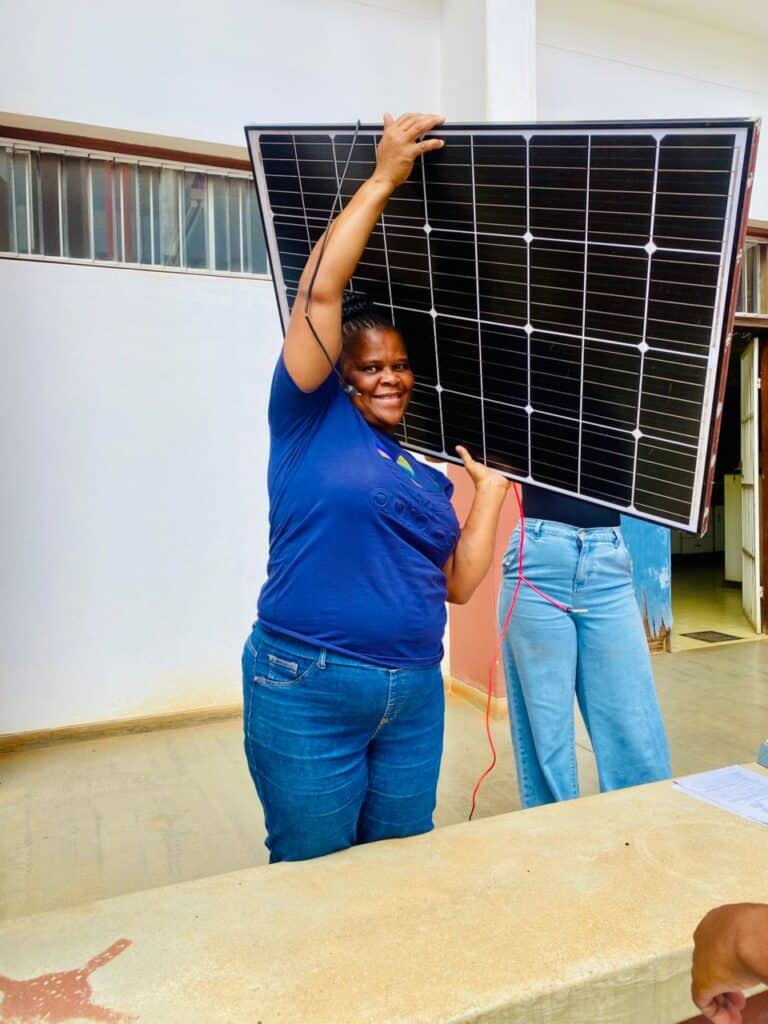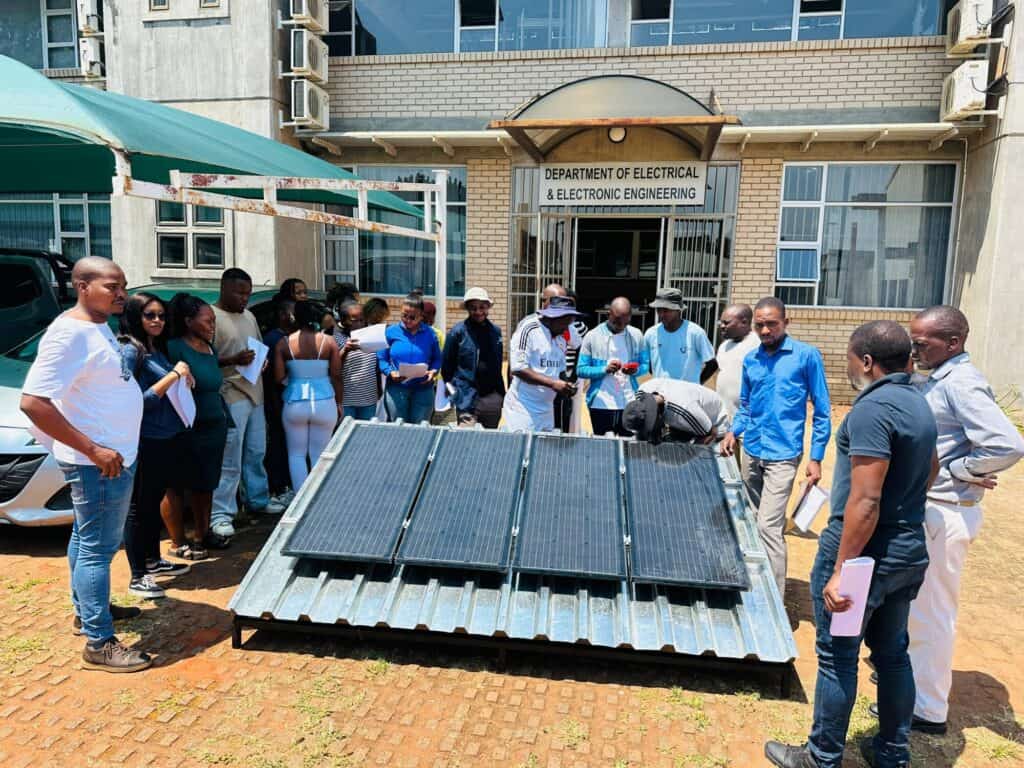
Building on the success of the first cohort, which laid the groundwork for bridging the green skills gap in Eswatini, the second cohort of the Minigrids Capacity Building Programme is taking a bold step forward. Implemented by the University of Eswatini’s (UNESWA) Centre for Sustainable Energy Research (CSER) on behalf of the Africa Minigrids Program (AMP), led by UNDP with support from the Global Environment Facility (GEF), this cohort introduces a forward-looking finance module that incorporates Artificial Intelligence (AI) tools. The module equips participants with next-generation skills to accelerate minigrid development, continuing the momentum established by the program’s inaugural cohort.
This integration reflects a wider shift in the energy sector toward data-driven decision-making, helping make minigrid projects more viable and sustainable for communities.
Delivered through UNESWA’s AI Academy, the finance module goes beyond traditional project financing theory. It integrates AI-driven tools that enhance financial modelling, grant application processes, and investment readiness for minigrid projects.

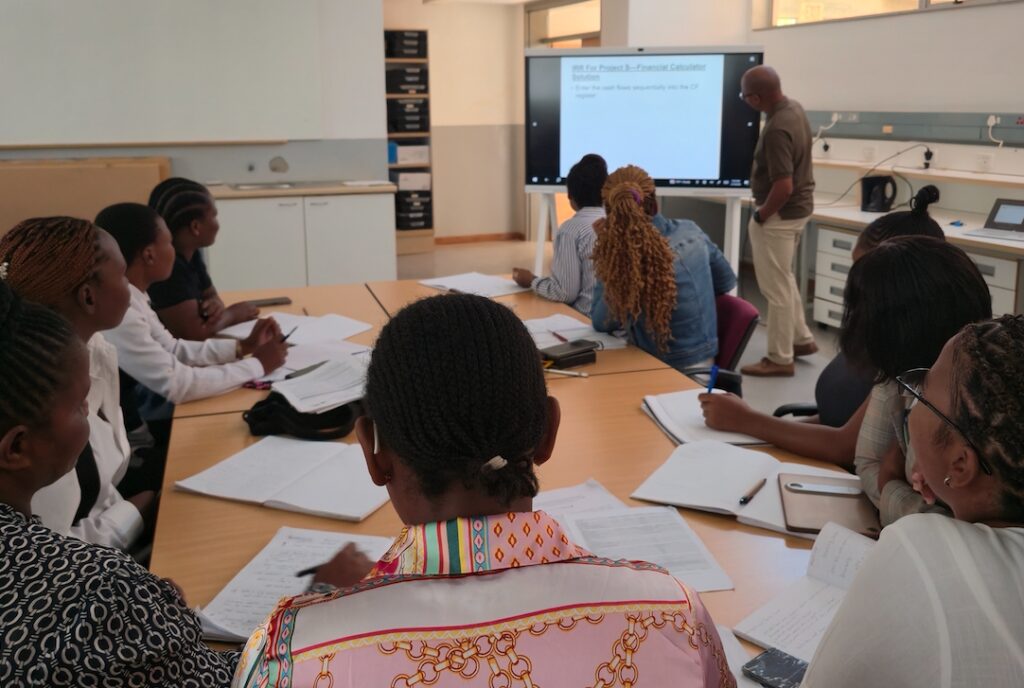
Professor Simiso Mkhonta spoke on how AI is being integrated into the Minigrids Capacity Building Program: “AI strengthens financial projections and cash flow modelling, improves load forecasting for revenue planning, helps analyze consumption patterns for Productive Energy Use, streamlines grant applications, and identifies optimal business models based on data insights,” he said.
Over 100 students are currently enrolled in Cohort 2, which commenced on 26 January 2026, including 21 international participants from countries such as South Africa, Kenya, Nigeria, Namibia, Malawi, Tanzania, Ghana, the USA, and Nepal. The online and in-person cohorts run parallel, having already covered modules like Design Parameters for Minigrids, Load Forecasting, and Productive Energy Use Management.
By combining AI tools with hands-on training, the program aims to accelerate minigrid deployment and improve energy access in communities across Eswatini and beyond.
The Community Minigrid Development Capacity Building Programme is fully sponsored by AMP Eswatini, with technical guidance from UNDP and funding support from the GEF. This partnership ensures a comprehensive approach to digital knowledge management, AI-driven training, and capacity building, reinforcing the program’s goal of preparing the next generation of minigrid developers and energy professionals.