AMP Somalia is strengthening digital monitoring of renewable energy minigrids to improve data, transparency, and sector planning. The platform will help support informed investment and accelerate the growth of Somalia’s renewable energy sector.
Somalia’s renewable energy sector has significant room to grow. UNDP Somalia’s 2025 Annual Report reports that a De-risking Renewable Energy Investment (DREI) analysisidentified an estimated 138.7 MWp of targeted solar PV capacity in Somalia
As the sector grows, having reliable information on where systems are operating and how they are performing becomes increasingly important.
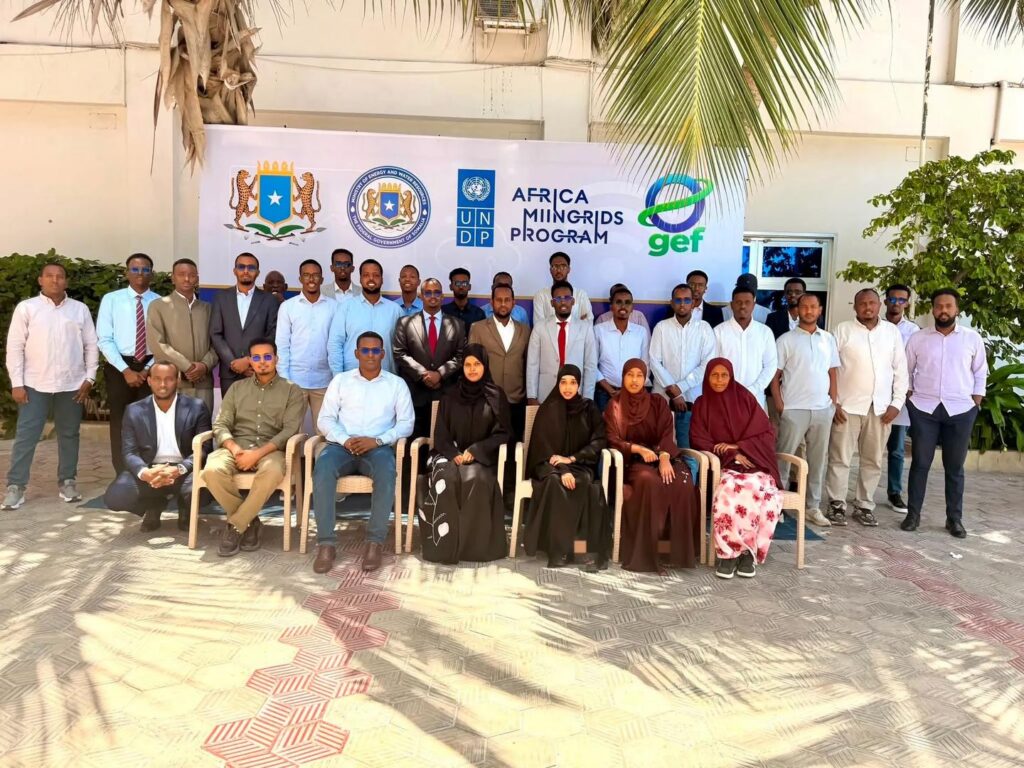
On 3 September 2026, the Ministry of Energy and Water Resources, in collaboration with UNDP Somalia, convened a national consultation in Mogadishu on the development and operationalization to track the Africa Minigrids Program (AMP) Somalia digital platform.
The consultation brought together government institutions, Electricity Service Providers, Solar Energy Companies, Universities, Digital Data Specialists and Technical Experts to discuss how the platform can support the monitoring and management of Somalia’s minigrid sector.
The platform is designed to bring together information from minigrid sites into a structured digital system, including data on technical performance, energy production and consumption, equipment, financial indicators and implementation progress. It will support standardized monitoring through the AMP Quality Assurance and Monitoring Framework (QAMF).
“This platform will provide better access to mini-grid data and support more effective monitoring and regulation of the sector.” Abdullahi Ahmed Dayib, director of National Electricity Authority (NEA) reflected.
The value of the platform goes beyond collecting information.
Data from individual sites can be organized and presented through dashboards, helping users monitor performance, identify gaps and follow changes over time. The wider AMP platform architecture is also designed to support standardized data collection and provide near real-time performance insights for decision-makers and investors.

For decision-makers, this means having better information to support planning, investment and oversight. For the sector more broadly, it can strengthen transparency and create a common evidence base for understanding the performance of renewable and hybrid minigrid systems.
This work builds on progress already made in Somalia’s renewable energy sector. In 2025, UNDP supported the validation of Somalia’s first renewable energy delivery models and a draft Digital Strategy for Minigrid Monitoring and Data Systems. AMP selected the open-source Prospect platform to monitor minigrid performance and share regional data.
The consultation focused on the decisions needed to move the Somalia platform towards implementation. Stakeholders discussed data governance and protection, cybersecurity, hosting, platform ownership, interoperability with existing systems and the selection of sites for the initial pilot phase.
These discussions are particularly important because the platform is being developed as part of a wider regional system. The AMP architecture connects national platforms to a regional platform, allowing data to contribute to a broader picture of minigrid deployment and performance across participating African countries.

“The AMP Digital Platform will enable us day-to-day monitoring and will strengthen our ability to collect and use reliable data, supporting better planning and decision-making for Somalia’s minigrid sector.”Director of Energy, MoEWR — Eng. Abdifatah Abshir
The next phase will translate the agreed key action points into the decisions and actions required to finalize the platform’s design, hosting, data governance, and operational arrangements. This will be followed by configuration, testing, training, and deployment.
For Somalia, the ambition is straightforward: better information, better monitoring, and better decisions as the country expands its renewable energy systems.