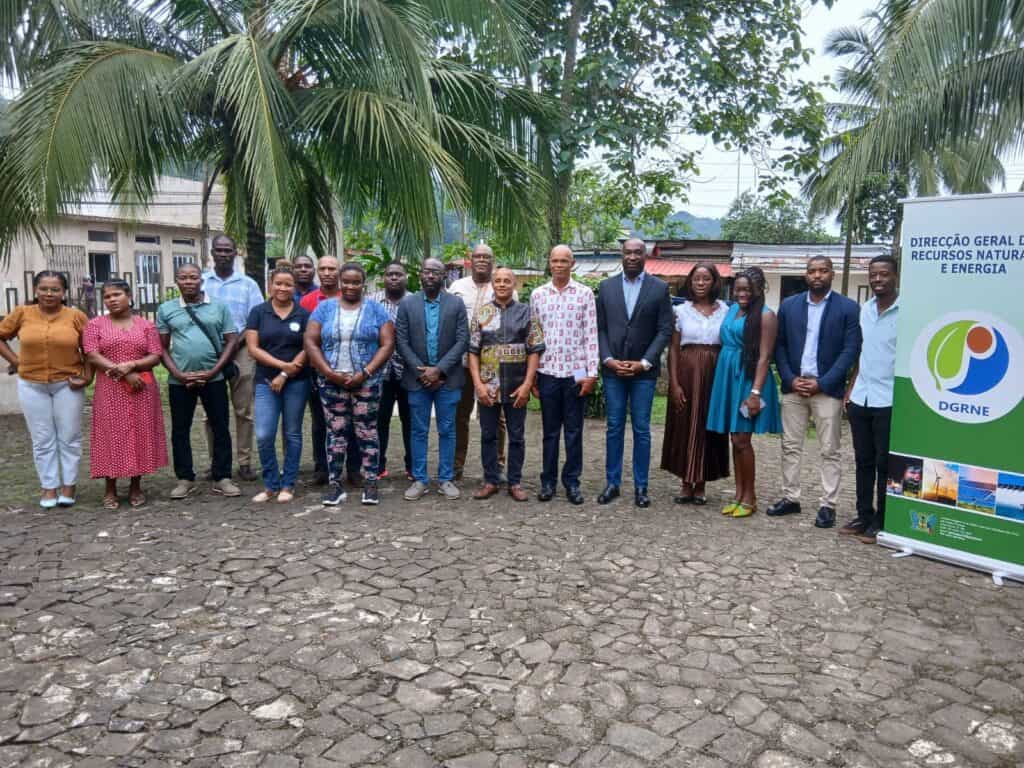
The Africa Minigrids Program (AMP) recently supported a consultative workshop on renewable energy minigrids in the Autonomous Region of Príncipe (RAP), São Tomé and Príncipe, as part of the national dialogue process under Component 1 of the AMP project, marking an important step toward strengthening the island’s clean energy transition. The national dialogue is a core element of AMP, bringing together government and stakeholders to reach consensus on how renewable energy minigrids will be financed, regulated, and operated over the long term. Rather than focusing solely on technical solutions, the process addresses the enabling policy, regulatory, and financial frameworks required to scale up investment in clean minigrids.
Held on 21 January 2026, the workshop was organized by the Government of São Tomé and Príncipe, through the Directorate-General for Natural Resources and Energy (DGRNE), in partnership with UNDP, with support from the Global Environment Facility (GEF).
Advancing Minigrid Solutions in Príncipe
The Autonomous Region of Príncipe, like São Tomé, continues to face structural challenges in electricity supply, including heavy reliance on diesel-powered thermal systems, high generation costs, and distribution constraints. Renewable energy minigrids are increasingly recognised as a strategic solution to improve energy reliability, affordability, and resilience, while reducing greenhouse gas emissions.
The workshop was preceded by sectoral stakeholder meetings and field visits to communities targeted by the project, ensuring that discussions were grounded in local needs and realities. Participants included representatives from the Regional Government, EMAE, community leaders, women’s associations, non-governmental organisations, private sector actors, and other strategic partners.
Key Themes and Discussions
The workshop focused on several core areas critical to the successful deployment of minigrids in Príncipe:
- Presentation of the AMP and its expected benefits for the Autonomous Region of Príncipe
- Integration of decentralised renewable energy solutions to expand access to clean electricity
- Gender and social safeguards, highlighting the importance of inclusive and equitable energy planning
- Identification of productive uses of energy, including opportunities linked to sustainable tourism, agro-industry, and women-led entrepreneurship
- Advancing the national dialogue on minigrid delivery models, including discussions on financing structures, tariff frameworks, institutional roles, and the level of public support required to ensure both affordability and private sector participation
Supporting Sustainable Development and Energy Resilience
The discussions reinforced the role of minigrids in supporting local socio-economic development, strengthening institutional alignment, and advancing national consensus on enabling policies and regulations, laying the groundwork for future investments in renewable energy infrastructure. Under AMP, São Tomé and Príncipe plans to deploy solar photovoltaic minigrids with an estimated capacity of 0.7 MW and 1.0 MWh of battery storage, benefiting approximately 21,800 people while contributing to emissions reductions.
This activity contributes to AMP’s broader support for national consensus-building and institutional coordination, helping lay the groundwork for scaled investment in low-carbon minigrids. The outcomes of the dialogue will inform the development of a time-bound national Action Plan, outlining clear responsibilities, implementation steps, and monitoring arrangements to operationalize the selected delivery model.
This workshop represents a decisive step toward enhancing energy resilience in Príncipe and advancing national and international commitments on climate action. The initiative contributes directly to the achievement of the Sustainable Development Goals, particularly SDG 7 (Affordable and Clean Energy) and SDG 13 (Climate Action).