
A pioneering scheme involving AMP Malawi is showing how appliance finance can strengthen minigrids, transform livelihoods, and empower women and young people.
By Aran Eales, Director and Co-Founder, Equal Access Energy
Access to electricity can transform lives, not just by lighting homes but by opening pathways to income generation, empowerment, and gender equity. In Malawi’s rural communities of Kudembe and Mthembanji, transformation is taking shape through a pilot appliance-financing initiative supported by the Africa Minigrids Program (AMP). This experience is generating practical lessons on how gender-responsive appliance financing can be integrated into minigrid rollouts, with AMP Malawi providing valuable insights for scaling inclusive, sustainable energy access and development.
In 2024, Malawi piloted its first appliance financing scheme for minigrid customers under AMP, implemented by Self Help Africa (SHA) with support from CUMO Microfinance and the University of Strathclyde. The initiative was designed to deliver shared benefits within local communities, enabling customers to invest in productive-use appliances while supporting minigrid developers through increased and more reliable electricity demand. The pilot has also surfaced important lessons about gender, particularly in relation to women’s time, economic opportunities, and empowerment.
The Gendered Impact of Energy Poverty
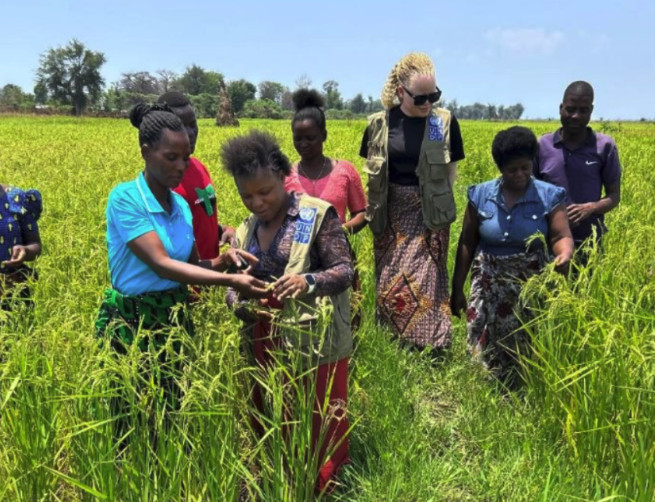
In many rural communities, energy poverty disproportionately affects women and girls. Women often bear the burden of unpaid domestic work: collecting firewood, cooking over biomass or kerosene, hauling water, and other energy-intensive chores. This “time poverty” limits their opportunities for education, rest, and income-generating activities.
When electricity arrives through minigrids or other off-grid solutions, it offers more than light: it can ease drudgery, improve safety and health by reducing reliance on polluting fuels, and expand opportunities for livelihoods and upward mobility.
However, access alone does not guarantee equity. Gendered divisions of labour, structural constraints around assets, credit and decision-making, and social norms often mean that benefits accrue unevenly, typically favouring men, unless interventions are designed with gender explicitly in mind. This is why appliance financing and productive use of energy (PUE), combined with a gender-responsive approach, is critical.

Why Appliance Financing and Productive Use of Energy (PUE) Matters
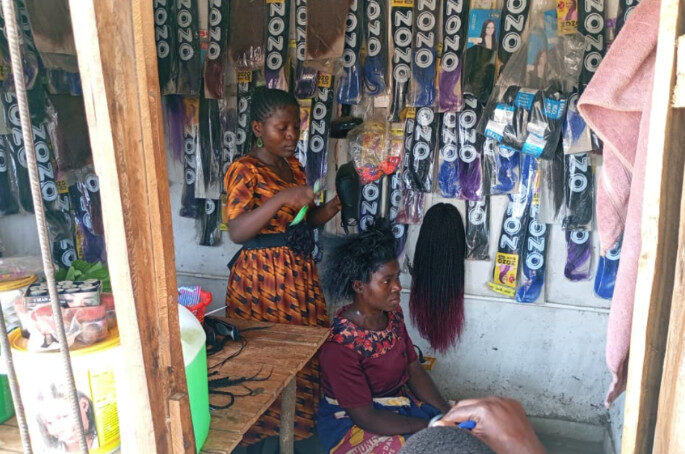
A minigrid connection provides electricity, but meaningful transformation comes when households and enterprises can access and use appliances: lights, phone charging, refrigeration, processing equipment, milling machines, water pumps, tailoring and sewing machines, hair clippers, and more. These appliances convert electricity into concrete services that meet everyday needs, improve livelihoods, and generate income.
However, the upfront cost of appliances, lack of access to credit, and lack of mobile devices and mobile money often block rural, low-income, and especially women-headed households from harnessing these opportunities. A financing mechanism tailored to their needs can overcome these barriers. As demonstrated by AMP Malawi, a gender-responsive appliance financing scheme can make a real difference:
- It reduces upfront capital requirements, making appliances accessible.
- It enables small enterprises, often women-led, to emerge or scale up.
- It stimulates demand for electricity beyond lighting, supporting minigrid viability.
- It can contribute to broader goals: poverty reduction, gender equality, economic development, and climate resilience.
These align with global evidence: off-grid and modern energy programmes that embed PUE and gender-aware design have greater potential for sustainable, equitable outcomes than “connection only” approaches.
How Was the Appliance Financing Pilot Implemented?
A key lesson from AMP Malawi is that successful appliance financing requires more than simply providing access to credit. The intervention was designed through a collaborative process involving local communities, Self Help Africa (SHA), CUMO Microfinance, and the University of Strathclyde to ensure that financing, productive-use opportunities, and electricity supply were aligned.
The first step was identifying productive-use opportunities that reflected local priorities and market conditions. Through community engagement activities, residents, entrepreneurs, cooperatives, and farmer groups were consulted on their energy needs and business aspirations. Productive-use appliances were selected based on community demand, local availability, and their suitability for the technical capabilities of the minigrids. Wherever possible, appliances were sourced locally to avoid costly imports and supply-chain delays.
To deliver financing, AMP partnered with CUMO Microfinance, an organisation with an established relationship with Self Help Africa and extensive experience providing financial products for rural agricultural communities. With technical support from the project, CUMO adapted its existing lending approaches to create loan products suitable for productive-use appliances. Importantly, AMP funds did not directly purchase appliances; instead, financing was provided through loans that enabled customers and groups to acquire assets themselves.
The financing model was designed to be accessible to women and community groups. Female-led enterprises and cooperatives were actively encouraged to participate, and group lending approaches helped reduce barriers faced by individuals who might otherwise struggle to access finance. Most repayments were collected in cash through local agents due to limited mobile-money availability in the target communities. The loans followed a lease-to-own approach, allowing borrowers to take full ownership of the appliances once repayments were completed.
Financing was complemented by business-development support delivered by CUMO Microfinance. Prior to receiving loans, participants received training in business management, bookkeeping, accounting, marketing, and enterprise development. This helped ensure that appliance financing was linked not only to asset acquisition but also to the skills and knowledge needed to build sustainable businesses and generate long-term income from electricity access.
Evidence from Pilot Communities: Kudembe and Mthembanji
The AMP Malawi pilot in Kudembe and Mthembanji intentionally combined minigrid deployment with a gender-responsive appliance financing mechanism, under the project’s Gender Action Plan (GAP). The findings and early outcomes are encouraging:
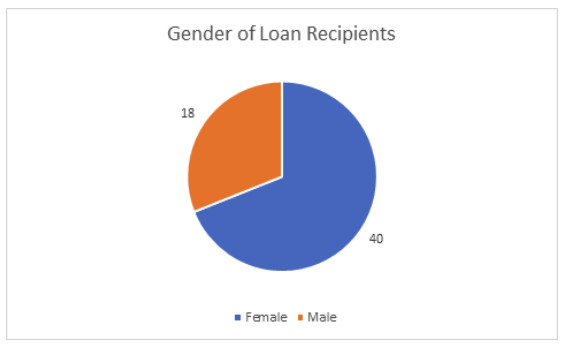
- Strong demand from women: Over half of the appliance-financing loans (29 out of 54) were requested by women, suggesting a strong appetite among women entrepreneurs to seize new opportunities when financing becomes available.
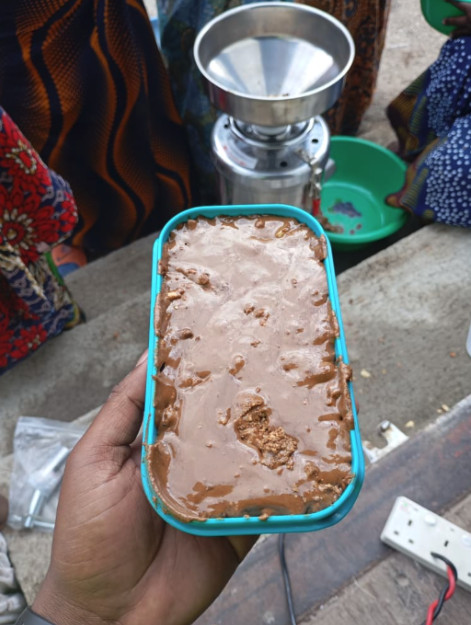
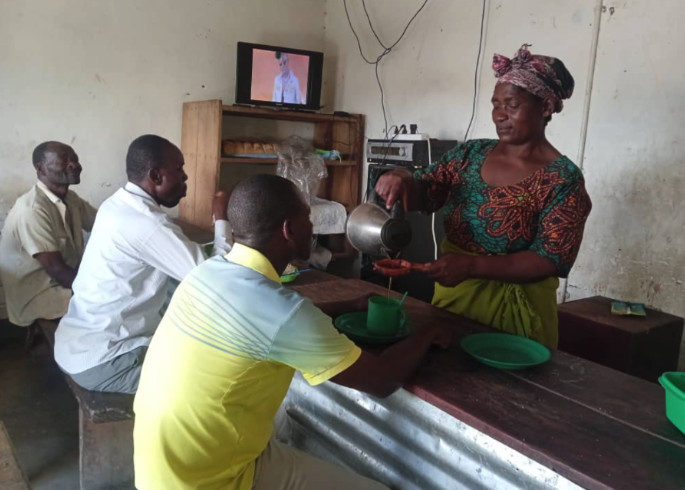
- Diverse women-led businesses: Post-connection, a variety of enterprises emerged or expanded, including bakeries, salons, juice-making shops, small restaurants, and refrigeration-based stores, many reportedly run or co-run by women.
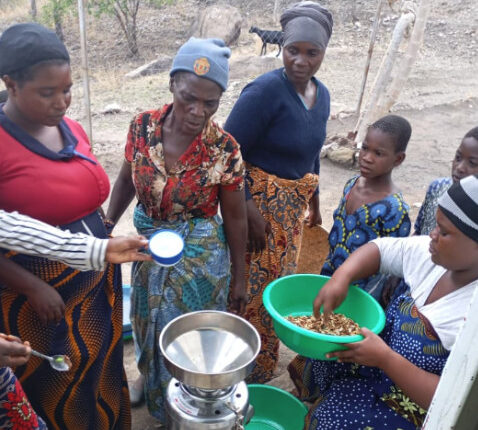
- Agribusiness and cooperative growth: In Kudembe, women’s cooperatives now hold maize stock valued at MK 2 million (Malawian Kwacha), intended for sale during scarcity periods, a livelihood diversification and safety-net strategy amid national food shortages. In Mthembanji, members have opened savings accounts linked to their rice-farming and processing enterprises, and solar-powered milling machines are now operational locally, reducing post-harvest processing costs and increasing value addition.
- Enterprise expansion and value chain strengthening: Groups are aiming higher, for example through oil-pressing from local legume production (Kudembe) or cooperative-run rice mills and packaging machines (Mthembanji). This shift reflects ambition beyond subsistence and indicates confidence that electricity and financing can support longer-term commercial value chains.
- Education benefits: Children’s study time at home more than doubled, from 3.9 hours per week in 2019 to 8.1 hours in 2024. If this trend holds for girls, the long-term implications for women’s education and empowerment are profound.
- Time poverty reduction: Women reported a 32% drop in time spent cooking each day: from 2.5 hours in 2019 to 1.7 hours in 2024. Lighting and improved appliances allowed tasks to be carried out more flexibly and efficiently. However, most women did not translate time savings into income generation, reflecting the persistent gender norms.
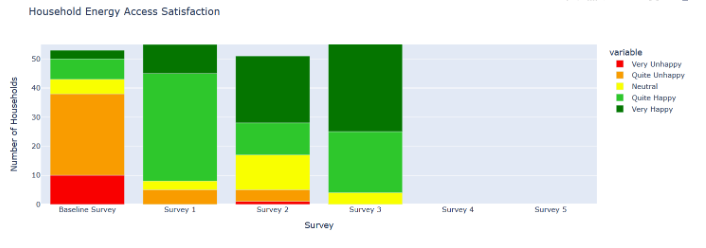
- Happiness and satisfaction: Both men and women reported steadily increasing satisfaction with their energy access, with “unhappy” responses disappearing completely by 2024. Responses were measured using a Likert scale ranging from very unhappy to very happy.
- Social empowerment and community benefits: Women report improved ability to support their families, pay for inputs such as farmland rent, and cover other essentials. There are initial signs of more inclusive household decision-making around electricity use, improved support for children’s education, and even efforts to challenge poverty-driven social issues such as early marriage. Community perceptions appear to be shifting, with anecdotal admiration expressed for women-led enterprises.
Together, these results suggest that appliance financing, when paired with minigrid access and gender-responsive implementation, can drive real economic and social transformation for women and their communities. However, while appliance financing enabled women to access assets and reduce drudgery, it did not automatically shift deep-rooted inequalities in decision-making or community respect.
What We Learned About Scaling Success
From the pilot’s initial phase, several critical lessons and enabling conditions emerged that could inform scaling or replication in other contexts.

What’s Next for Scaling Gender-Inclusive PUE
Based on AMP’s pilot and related research, several recommendations emerge to support the scaling and consolidation of gender-inclusive appliance finance and PUE.
Data and monitoring
First, expand gender-disaggregated data collection and impact monitoring. This includes tracking who receives financing (men and women), who uses appliances, who runs businesses, loan repayment performance, business survival, value-chain development, income and time-use changes, household decision-making, and social outcomes such as education and health.
Group models
Strengthening cooperative and group-based models is also important. Encouraging women-led cooperatives or mixed-gender groups, rather than focusing only on individual entrepreneurs, can enhance resilience, reduce risk, and enable larger investments through shared assets.
Business support
Beyond financing appliances, business development support is critical. This includes financial literacy, market access support, bookkeeping, value-chain planning, supply-chain linkages, bulk procurement, and, where feasible, shared infrastructure such as processing, storage, and distribution.
Financing design
Financing mechanisms should be flexible and accessible, reflecting rural realities. This includes repayment schedules aligned with cash-flow cycles, small-ticket loans, lease-to-own or pay-as-you-go models, group collateral rather than individual collateral, and transparent, simple processes.
Gender integration
Gender awareness should be embedded across project design, from energy supply to community engagement. Ensuring women’s participation in decision-making and cooperative governance, and accounting for constraints such as time poverty, mobility, social norms, and access to resources, is essential for equitableoutcomes.
Value chains
Promoting value-chain development beyond first-generation enterprises can amplify economic impact. Supporting agro-processing, value addition such as oil pressing, milling and packaging, alongside storage and supply-chain infrastructure, can strengthen employment, resilience, and local economies.
Policy and institutions
Finally, supportive policy and institutional frameworks are needed to sustain and scale progress. Working with government, funders, and local institutions to integrate gender-responsive financing and PUE into national rural electrification strategies, alongside enabling conditions such as land rights, cooperative laws, microfinance institutions, and local markets, will be important.
Why This Matters for Gender Equity and Sustainable Energy
AMP Malawi’s pilot shows that minigrid electrification can be a powerful engine for social and economic change, especially when paired with inclusive, gender-sensitive appliance financing and productive use of energy design.
For women, households, and communities, this approach can translate energy access into real gains in income, agency, education, health, and resilience. At the same time, increased electricity demand driven by productive use strengthens the viability and sustainability of minigrid systems, reinforcing the business case for investment. These outcomes align closely with national development priorities and global goals on gender equality, energy access, poverty reduction, decent work, and climate action.
Research and field experience both point to the same conclusion: gender-blind, connection-only electrification will likely miss its full potential. Embedding gender-awareness, appliance financing, and support for productive use can make energy access truly transformative.
AMP Malawi’s pilot in Kudembe and Mthembanji demonstrates what many gender and energy scholars argue: energy access becomes transformative when coupled with gender-aware, inclusive approaches to appliance financing and productive use. By lowering barriers to appliances, enabling women-led enterprises, and aligning energy services with empowerment and economic opportunity, the pilot underscores a powerful insight: access to electricity is not just about light, it is about giving people, especially women, the means to shape their futures. When design, financing, and community engagement are done right, minigridscan be far more than infrastructure. They can become engines of inclusive development, gender equity, and social change.
Other Resources: